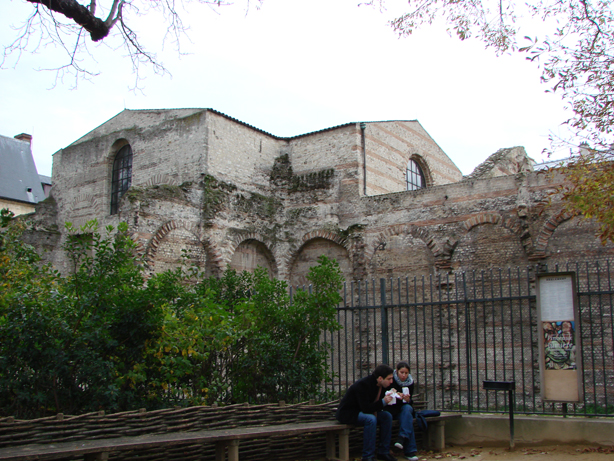
The baths are visible from the nearby streets This view is from Boulevard Saint-Germain. Parts have been restored. The glass in the windows of the frigidarium is not original.
| The baths are visible from the nearby streets This view is from Boulevard Saint-Germain. Parts have been restored. The glass in the windows of the frigidarium is not original. |
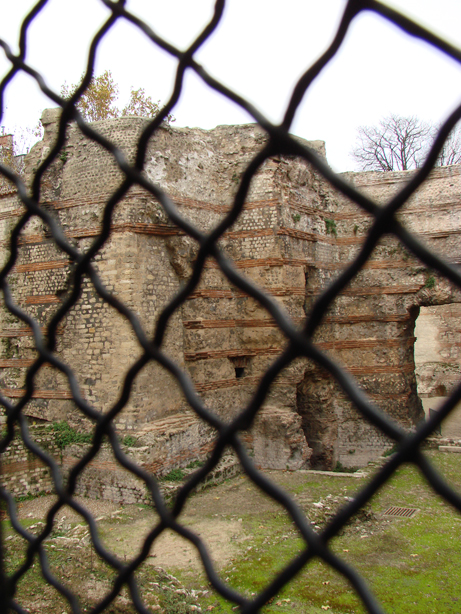 Other parts of the baths have neither been restored nor incorporated into the museum. The site has been tidied up and the fence keeps out the tourists. |
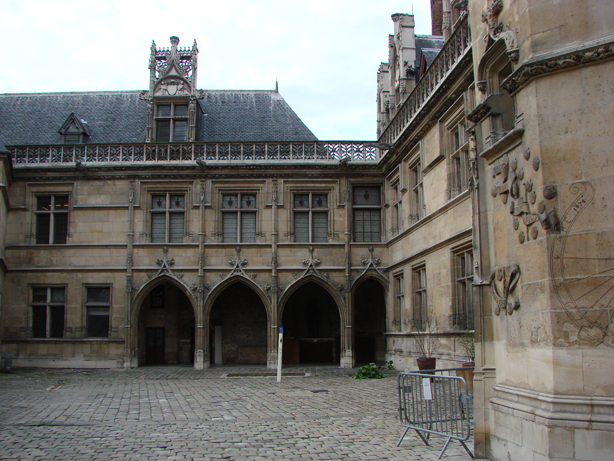 I entered the museum through the courtyard of the 15th century hôtel. It was founded as a town house for the abbot of Cluny (a Benedictine monastery) and is a great example of late medieval architecture. |
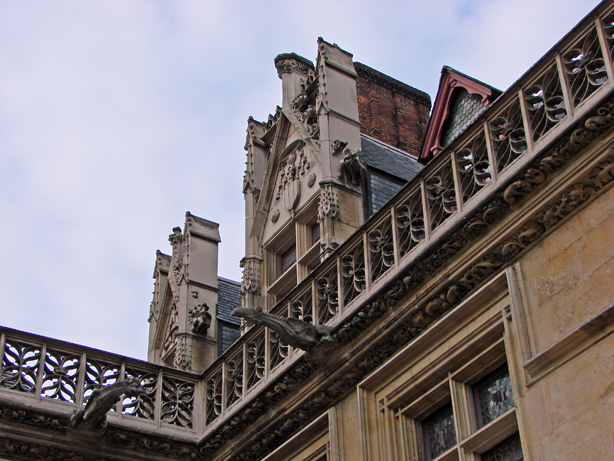 A closer look at the mansion's roofline. More gargoyles! (Required by law, it seems.) |
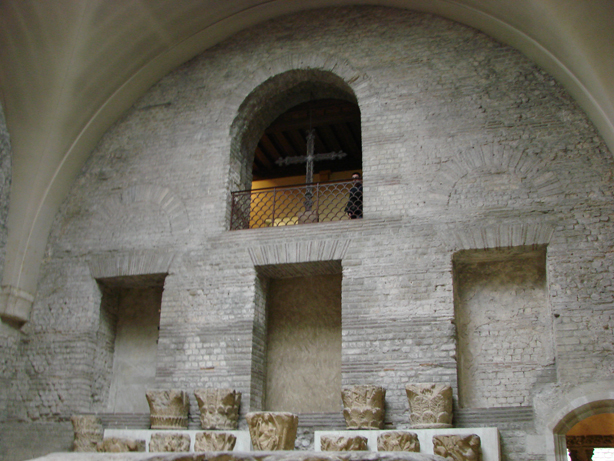 Part of the museum incorporates the Roman ruins such as this wall behind a display of architectural capitals. |
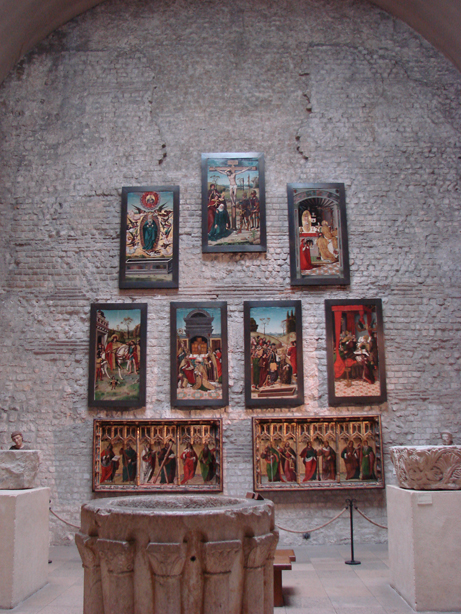 The medieval panels on the Roman wall are an interesting contrast. |
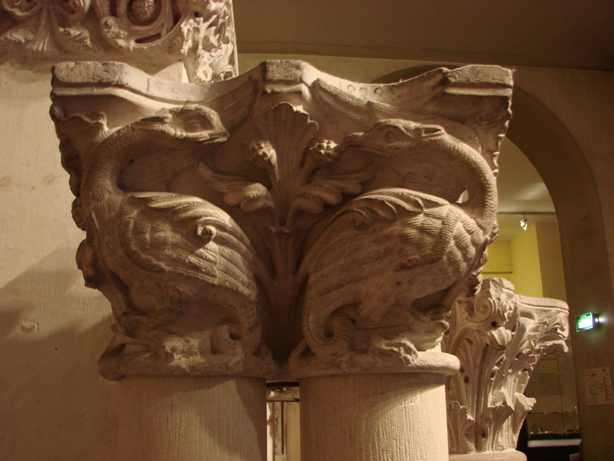 Capital Dragons. |
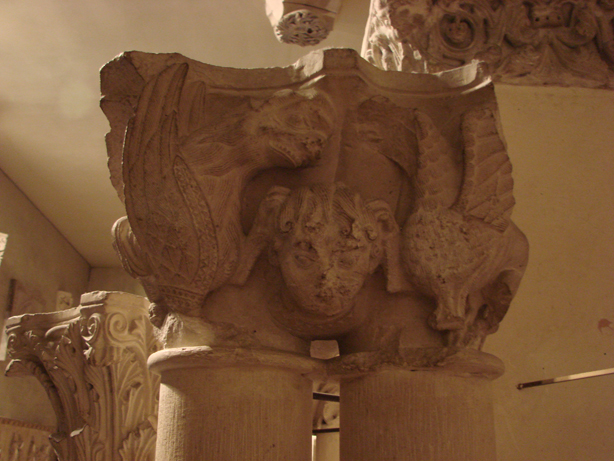 Capital Griffins. |
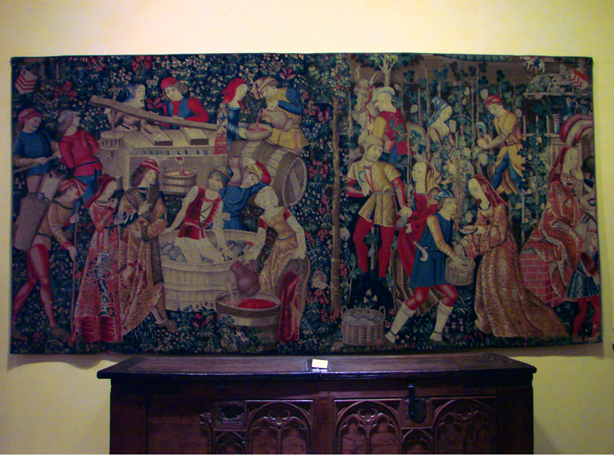 A medieval tapestry about the harvesting grapes and making wine. |
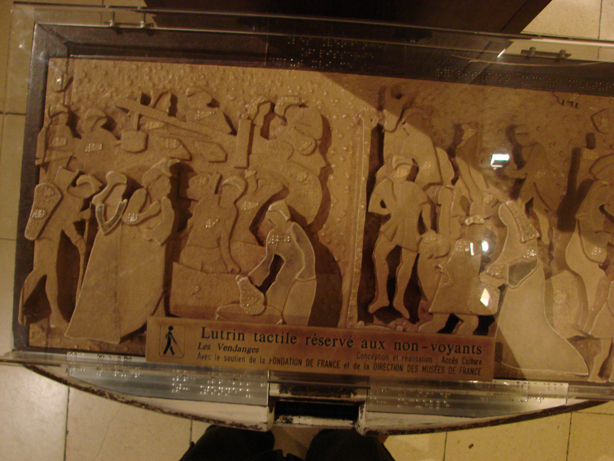 A tactile model of the tapestry Les Vendanges. They weren't numerous, but I saw models like this at locations around the city. |
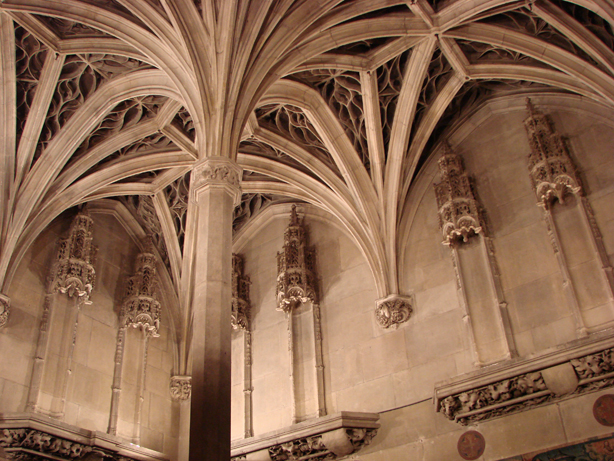 The ceiling of the abbot's private chapel. |
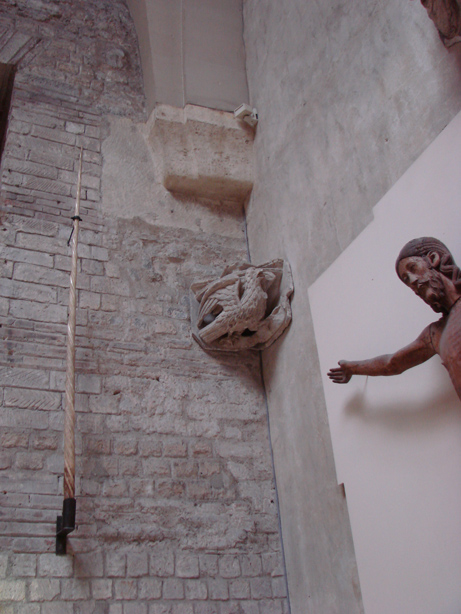 A unicorn's horn. OK, a narwhal's horn. |